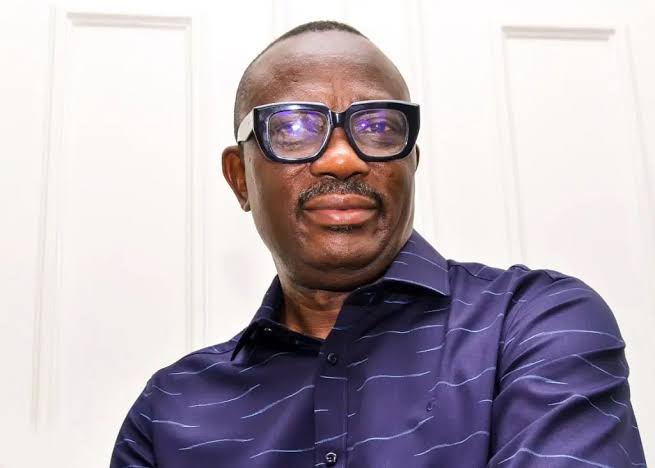
A personal aide to the late Otunba Bamidele Akingboye popularly known as OBA has dismissed claims that the Ondo State politician died from depression, mental illness or health-related causes, insisting that police investigations have established a case of murder and that attempts to suggest otherwise amount to a distortion of facts.
In a detailed press statement issued on December 16, 2025, Mr. Oyeniyi Iwakun, who claimed to be Personal Assistant and Media Adviser to the late politician, narrated how news of OBA’s death reached him on September 3, 2025, and the events that followed.
Iwakun said he became alarmed around 8:20 a.m. after noticing several missed calls from a former state secretary of the Social Democratic Party (SDP), Mr. Jimi Akinyan.
According to him, repeated attempts to reach OBA failed, and moments later he was informed that the politician might have died, pending confirmation.
He said confirmation eventually came from OBA’s eldest son, Mr. Samuel Akingboye, who was himself confused and still trying to understand what had happened.
With the family’s consent, Iwakun said he announced the death publicly, stressing that at the time, the cause of death was unknown.
Later that day, he said reports emerged that injuries had been observed on OBA’s body, prompting the family’s decision to conduct an autopsy. By the following day, disturbing images allegedly linked to the incident had circulated online, further fueling speculation.
Seeking clarity, Iwakun travelled to Lagos on September 5 and visited OBA’s residence at VGC, where he met the widow, Mrs. Christianah Akingboye, and her children.
He said discussions at the house raised serious concerns, as he was given multiple and conflicting accounts of what transpired on the morning of OBA’s death.
According to him, the widow at different times suggested that OBA might have collapsed after a morning walk, suffered a cardiac arrest while jogging, been under threat over a London property transaction, or stayed behind for a land-related meeting while she prepared for a trip abroad. Iwakun said none of the accounts provided a clear or consistent explanation of how OBA died.
He noted that he later accompanied family members to the location behind the building where OBA was reportedly found, stressing that his role was strictly observational since the police had already taken over the matter.
Iwakun said he subsequently visited the Ajah Police Division and later the State Criminal Investigation Department (SCID), Panti, Yaba, after the case was transferred. He added that he made no formal statement, as he was neither a complainant nor a witness.
According to him, about two months later, he was informed that police had concluded investigations and forwarded the case file to the Directorate of Public Prosecutions (DPP). He cited a media interview by the Lagos State Commissioner of Police, who reportedly confirmed that a case of murder had been established and that some immediate family members and domestic staff had been taken into custody, adding that “they have a case to answer.”
Reacting to recent media interviews by OBA’s widow and some of his children suggesting that the late politician suffered depression or bipolar disorder linked to politics, Iwakun described the claims as false and deeply troubling.
He said he worked closely with OBA between 2019 and 2025 and never observed any sign of mental illness, describing him as mentally sharp, energetic and deeply involved in politics, business, religious and social engagements.
Iwakun also highlighted OBA’s more than 40-year political career, spanning from the UPN era in 1983 to his emergence as the SDP governorship candidate in 2024, noting that he remained resilient, focused and hopeful despite electoral setbacks.
He further dismissed suggestions that OBA was financially ruined by politics, insisting that while he funded campaigns and party activities, he never deployed massive election-day logistics funds and remained cheerful and forward-looking until his death.
Iwakun concluded by urging the public to focus on the central issue raised by police findings: who killed OBA and why, insisting that justice must be served to protect the legacy of the late politician.